Seamless Floral Doodles: A Versatile Asset for Modern Creators
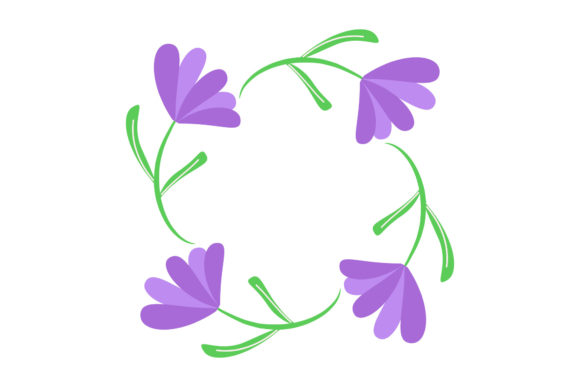
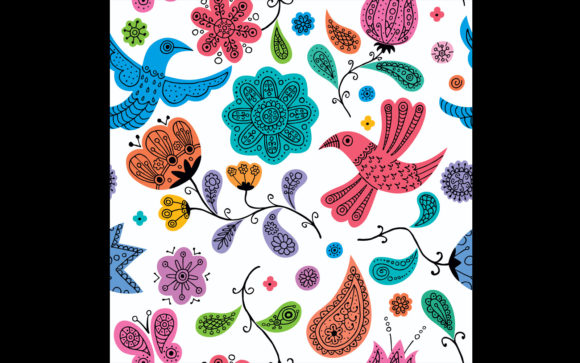
In the world of digital design, finding assets that are both beautiful and functionally robust can be a challenge. The Floral Doodles Pattern represents more than just a decorative element; it is a comprehensive, multi-format graphic resource designed for seamless integration into a wide variety of creative and professional workflows. This pattern, characterized by its playful, colorful, and interconnected floral motifs, is delivered as a complete package: an AI Adobe Illustrator vector file, a CDR CorelDRAW vector file, EPS files for broad software compatibility, an SVG for web and scalable applications, and a high-resolution JPEG raster file. This thoughtful preparation directly addresses the core needs of efficiency, consistency, and quality control in real-world projects.
Understanding the Asset and Its Place in Your Process
A seamless floral doodles pattern is a continuous, repeating design where elements interconnect at the edges, allowing it to tile infinitely without visible breaks. This makes it an ideal background, filler, or accent texture. The "doodle" style implies a hand-drawn, informal aesthetic, which brings warmth and approachability to projects. But the true value lies in its delivery. Each file format serves a distinct phase or platform within a creator's process. The vector files (AI, CDR, EPS, SVG) are essential for the editing and scaling phase, allowing you to modify colors, resize without quality loss, or extract individual elements. The high-resolution JPEG serves the deployment phase, ready for immediate use in layouts where further editing isn't required.
This asset fits naturally into the planning and execution stages of numerous projects. Whether you are a marketer designing a seasonal campaign, an educator creating engaging lesson materials, a small business owner developing product packaging, or a blogger styling a website, this pattern can be a starting point or a finishing touch. Its integration is not an isolated event but a step within a larger workflow involving other tools like design software, content management systems, and printing services.
Preparation and Compatibility: The Foundation for Smooth Integration
Successful use begins with understanding your end goal and the technical environment. The provided EPS versions, compatible with virtually all vector software, ensure you are not locked into a specific ecosystem. This is a critical consideration for teams or freelancers who collaborate with clients using different tools. Before even opening the files, assess your project's requirements: is it for print (requiring high DPI and perhaps specific color separations?), for web (where SVG's scalability and small file size are paramount?), or for social media graphics where the JPEG might be the quickest solution?
Organizing these files effectively is also part of the practical implementation. Label them clearly within your digital asset library. Many professionals create a dedicated folder for "Pattern Assets" or "Background Textures," categorizing by style and file type. This systematic approach saves significant time during the creative process, when you need to locate and test assets rapidly. The long-term usability of this Floral Doodles Pattern is enhanced by its vector origins; years later, you can still adapt it to new trends by simply altering its color palette within Illustrator or CorelDRAW.
Workflow Examples: From Concept to Final Product
Consider a freelance graphic designer working on a boutique brand's identity. After establishing logos and color schemes, they need complementary patterns for packaging and website accents. They open the AI file in Adobe Illustrator, match the pattern's colors to the brand palette using global swatches, and create several derivative versions. They then export tailored JPEGs for the web developer and EPS files for the printer. The pattern's consistency across all touchpoints strengthens the brand's visual coherence.
For a content creator or blogger, the workflow might be more immediate. They are crafting a series of spring-themed Pinterest pins. Using a template in Canva or Adobe Express, they upload the high-resolution JPEG floral doodles pattern as a background layer. Its seamless nature means they can stretch it to fit any canvas size without worrying about awkward edges. This eliminates a common friction point—searching for a perfectly sized background—and accelerates content production.
Practical Implementation Tips for Diverse Use Cases
- Extraction and Modification: Don't treat the pattern only as a whole. In Illustrator or CorelDRAW, you can ungroup elements. Use individual flowers, leaves, or swirls as icons, bullet points, or border elements in other documents. This extends the asset's value.
- Layering and Transparency: In digital layouts, place the pattern behind text or key images. Use transparency effects or subtle color overlays to ensure text remains legible, creating a professional, layered composition.
- Physical Product Application: For small business owners creating physical goods like greeting cards, tote bags, or wrapping paper, the high-resolution JPEG at 300 DPI is crucial for print quality. Always consult with your printer on specific file format preferences, often preferring EPS or high-quality PDFs generated from the vector files.
- Web Efficiency: For website backgrounds, consider using the SVG file. It scales perfectly across devices from desktop to mobile, and typically has a smaller file size than a comparable JPEG, aiding page load speed—a key factor for user experience and SEO.
Interacting with Other Assets and Decisions
The Floral Doodles Pattern rarely exists alone. Its integration involves deliberate decisions about complementary assets. It pairs well with clean, modern fonts to balance its whimsical style. It might accompany product photography, where it frames the subject in a lifestyle context. In a marketing campaign, it could be used alongside more structured infographics, providing visual relief and thematic connection. The decision to use it often comes after defining the project's tone: is it friendly, artistic, seasonal, or feminine? This pattern naturally supports those directions.
Furthermore, its use interacts with platform constraints. Social media platforms have recommended image dimensions and file size limits. The availability of multiple file formats allows you to optimize for each platform—using a compressed JPEG for Instagram, but an SVG for your website's hero section. This adaptability is a core component of a streamlined, efficient digital workflow.
Ensuring Quality and Long-Term Value
Quality control in using such an asset involves two aspects: technical output and aesthetic judgment. Technically, always check the final export. For print, proof the colors. For web, test the SVG on multiple screen sizes. Aesthetically, avoid overuse. A seamless pattern is a supportive element. Use it to accentuate, not overwhelm. Its long-term value is secured by its vector source files. As your skills or software update, you can return to the original AI or EPS file and rework it indefinitely, making it a permanent, adaptable member of your creative toolkit.
Ultimately, the Floral Doodles Pattern package is designed to remove technical barriers and inspire creative application. By providing every major file format, it anticipates the real-world scenarios where a project migrates from one software to another, from digital to print, or from a designer to a client. Its seamless nature solves a practical design problem, while its doodle aesthetic injects personality. Integrating it smoothly into your routine means recognizing which file to use at which stage, and understanding how this single asset can serve multiple roles across your projects, enhancing both your workflow's efficiency and your final outputs' appeal.